i · Hot, dense matter
Stars and supernovae as axion factories
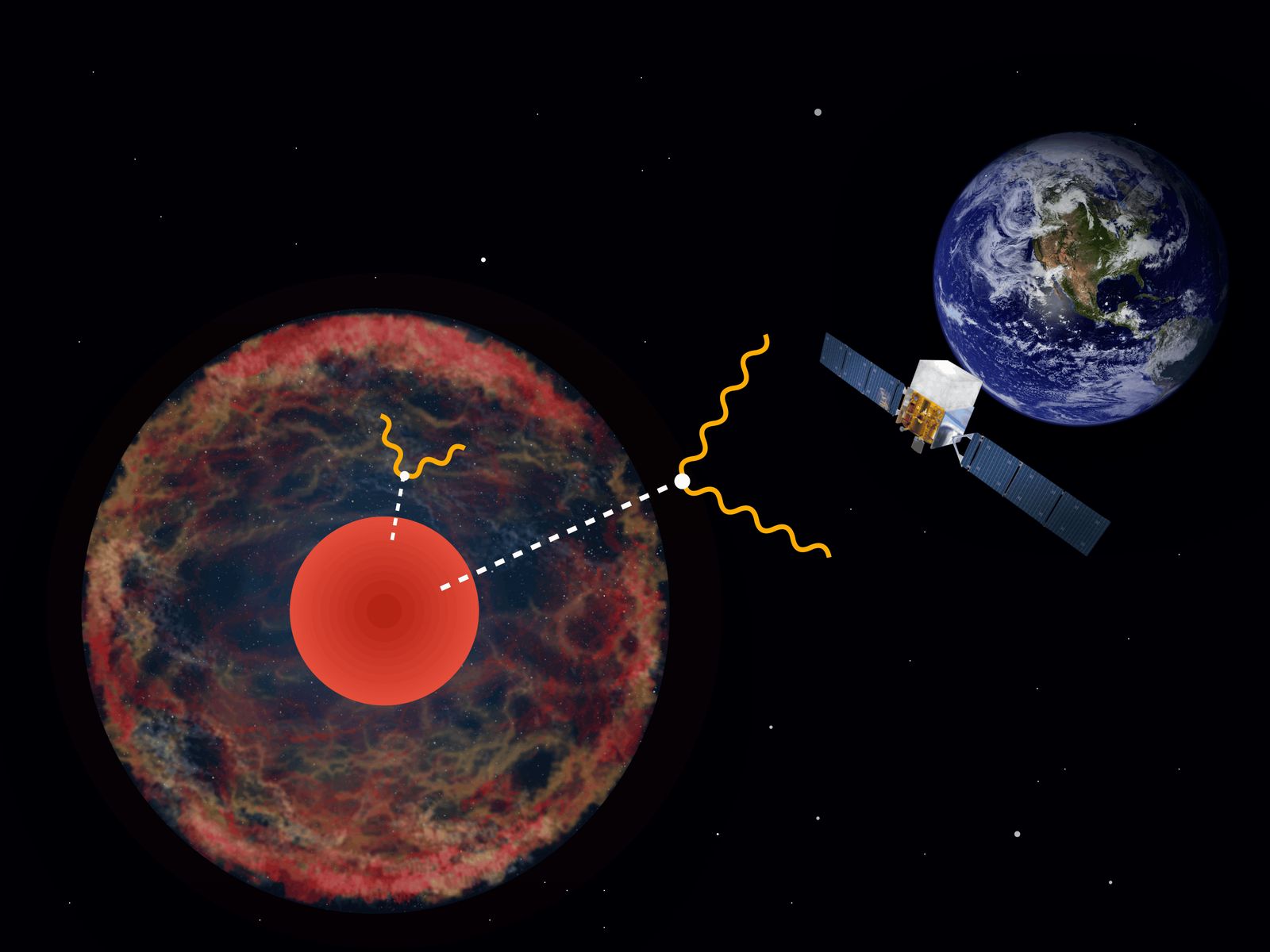
Stripped-envelope supernovae, Betelgeuse, the Sun and the massive stars of the galaxy M82 all make axions. NuSTAR and Fermi-LAT are the detectors.
I’m Francisco, a PhD candidate in astroparticle physics at TU Dortmund University and the University of Zaragoza. I use stars and supernovae as laboratories to search for axions and other feebly interacting particles with X- and gamma-ray telescopes.
PhD expected Sep 2027 · open to postdoc positions from Oct 2027
Sep 2026 · Research visit
Three weeks at the University of Padova
COST short-term scientific mission on turbulent axion–photon conversion in M82.
2026 · New paper
Small progenitors, large couplings
Phys. Rev. Lett. 137, 061004. Corresponding author.
From the core of a star to a photon in a telescope. I compute how axions are made, model the stars that make them, and analyse the X- and gamma-ray data myself.
i · Hot, dense matter
Stripped-envelope supernovae, Betelgeuse, the Sun and the massive stars of the galaxy M82 all make axions. NuSTAR and Fermi-LAT are the detectors.
ii · Cosmic-scale converters
Every supernova in cosmic history adds to a diffuse axion background. Galaxy clusters are megaparsec-sized magnets that can even turn high-frequency gravitational waves into light.
iii · Instruments
The NuSTAR glass-optics inventory, synchrotron measurements and optics simulations for the International Axion Observatory’s X-ray telescopes.
INSPIRE-HEP, 12 Oct 2026 · Authors are listed alphabetically, as is usual in the field, so each paper says what my role was.
Published in Physical Review Letters
Stars that lose their outer layers before exploding carry the strongest surface magnetic fields of any supernova progenitor, ideal for turning axions into gamma rays.
Led analysis · PRL 136, 171001 (2026)
Read the paperPublished in Physical Review Letters
Compact progenitors let photons from particles that decay close to the star escape, which probes couplings SN 1987A can’t reach.
Led analysis · Corresponding author · PRL 137, 061004 (2026)
Read on arXivPublished in Physical Review Letters
Heavy particles from M82’s massive stars would decay into X-rays on the 3.5 Mpc trip to Earth. Decay needs no magnetic field, which removes the biggest uncertainty of conversion searches.
Led analysis · PRL 134, 171004 (2025)
Read on arXivNuSTAR · Oct 2025
NuSTAR mission news on axion searches in the Sun, Betelgeuse and M82, with comments from me as first author.
Phys.org · Jun 2025
On galaxy-wide X-ray searches for axions, including our M82 paper.
Physics (APS) · May 2025
Michael Schirber on the M82 and M87 axion searches in Physical Review Letters.
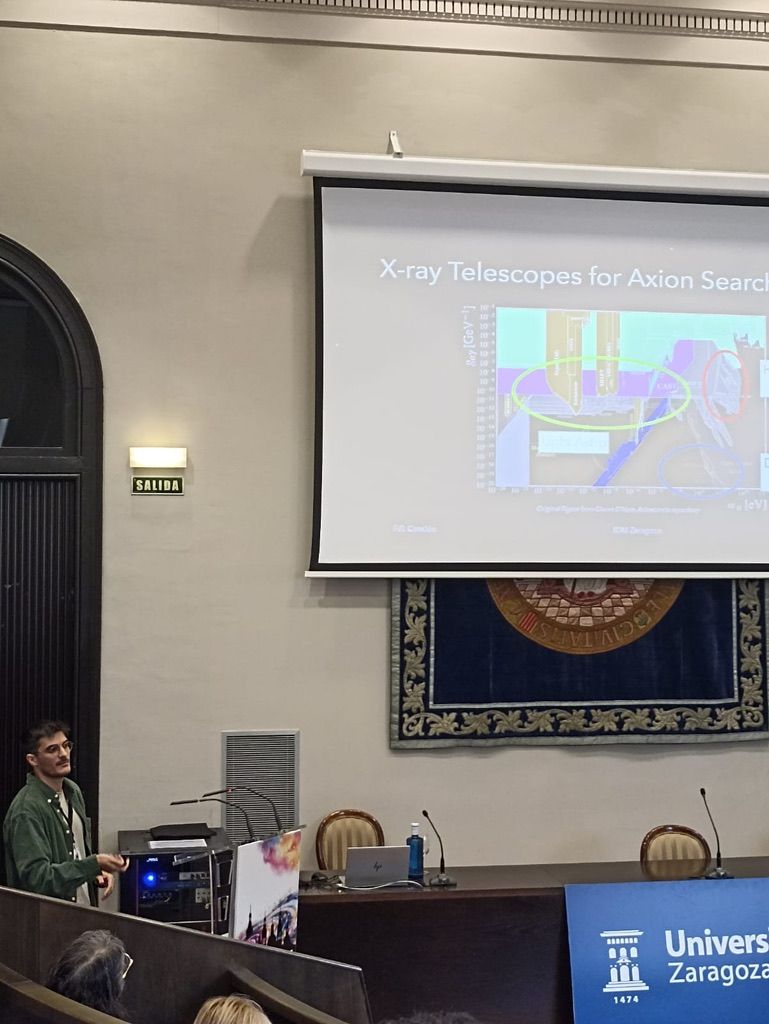
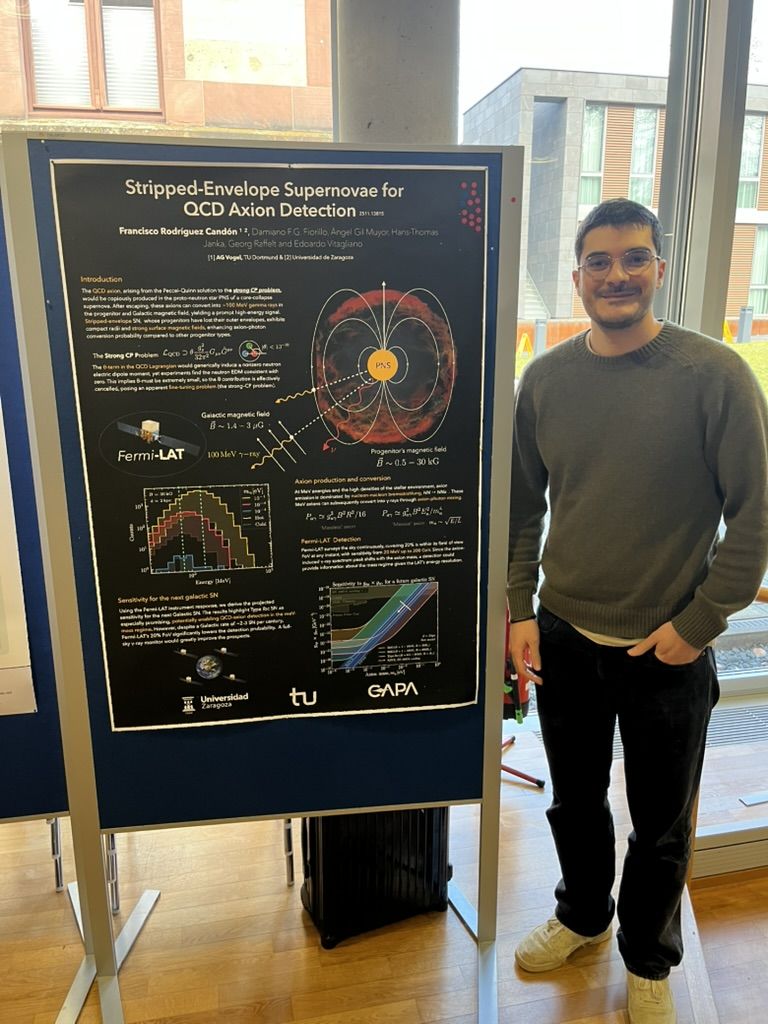
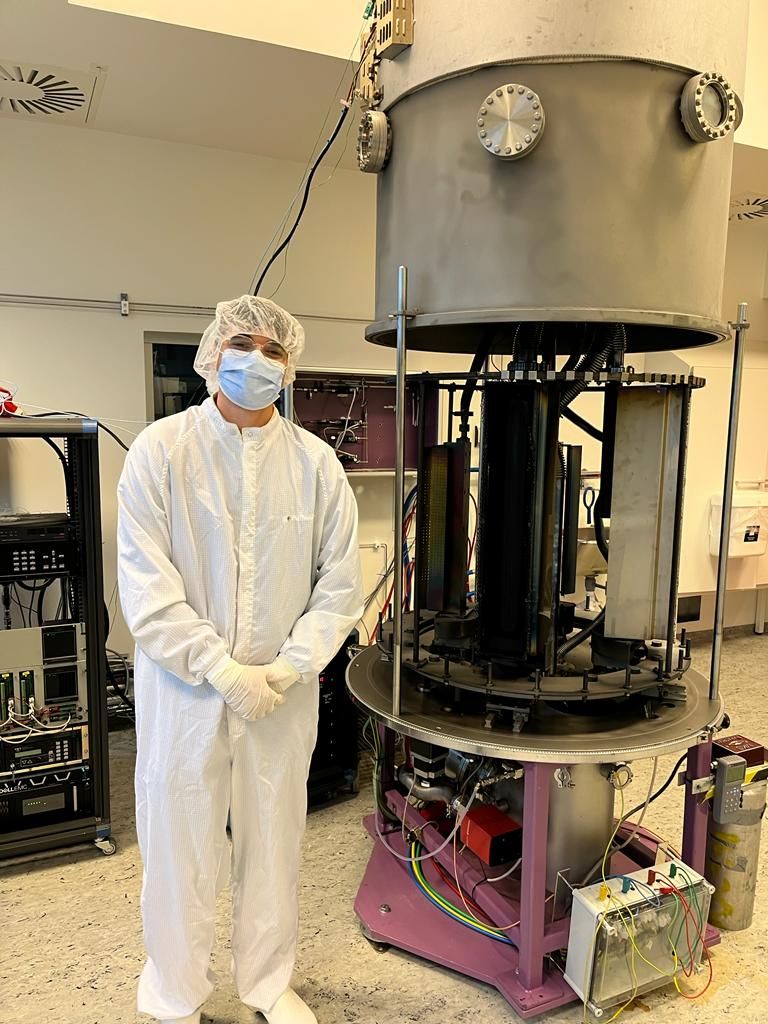
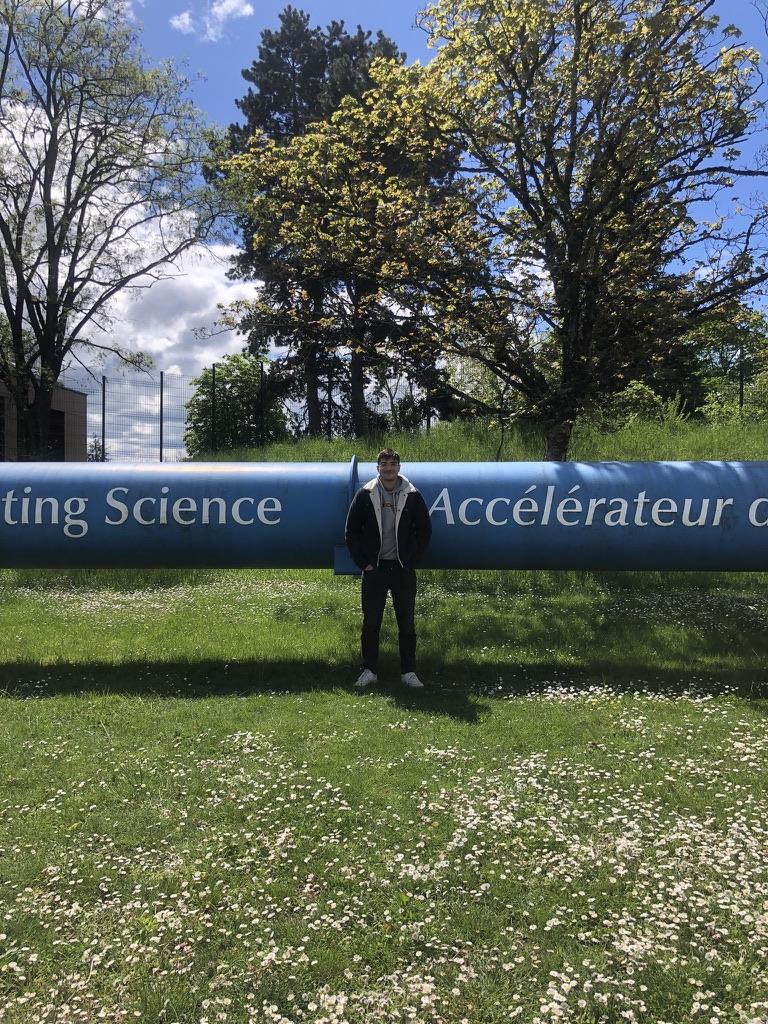
As social media manager at CAPA, the astroparticle centre in Zaragoza, I led the content team: scripts, filming and editing.
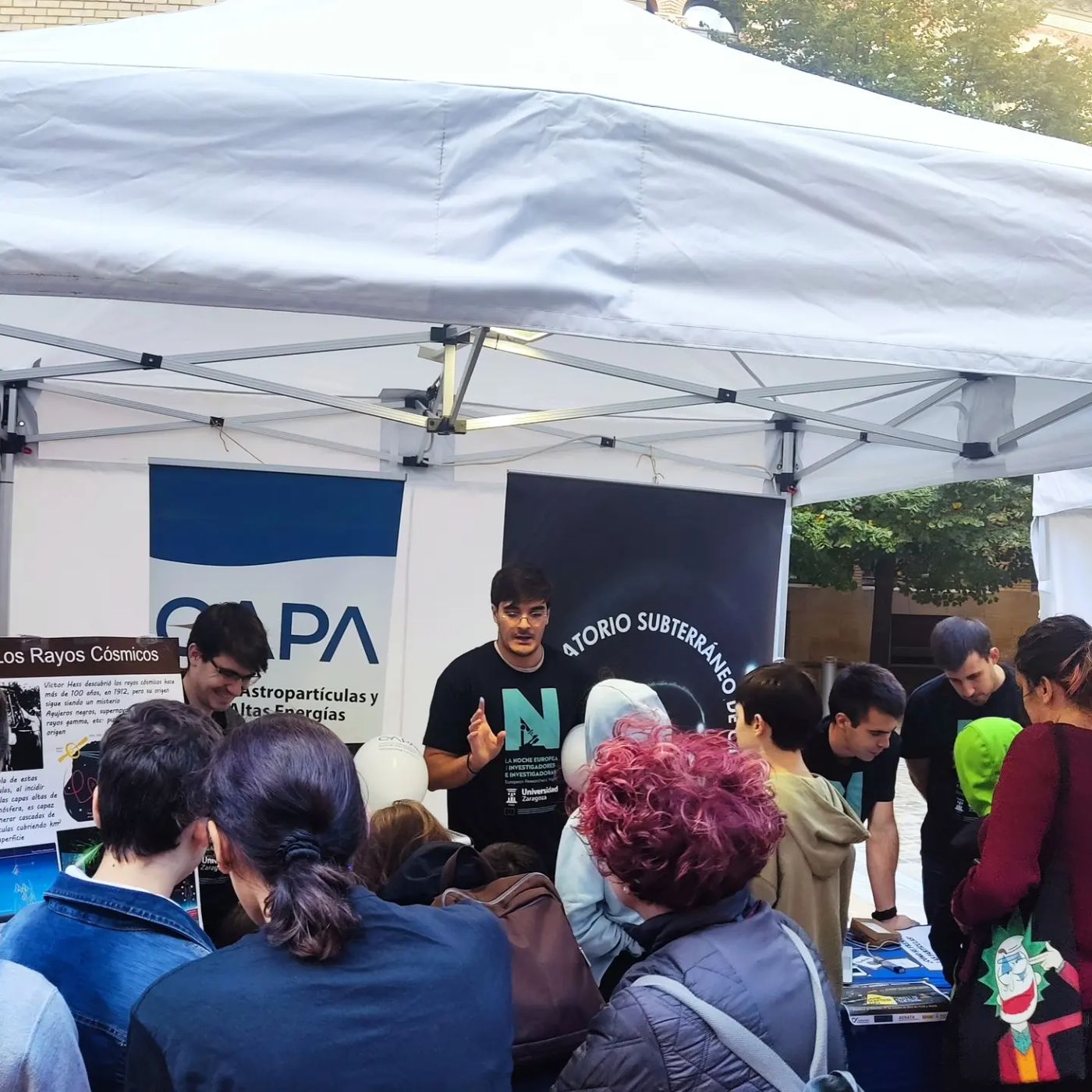
I’ve run stands at the European Researchers’ Night in Zaragoza, joined the open day at the Canfranc Underground Laboratory and brought detectors to school groups. In Spanish or English.

Jun 2026
4th COSMIC WISPers Training School, Corfu Summer Institute, Greece
Jun 2026
16th International Workshop on the Identification of Dark Matter (IDM 2026), Zaragoza, Spain
Mar 2026
DPG Spring Meeting, Section Matter and Cosmos (SMuK), Erlangen, Germany